

Geopolitical tension is driving the growth of defense tech, with global military spend rising for the 10th year running, and active state-based conflicts at their highest level since World War II. Startups and contractors are now appearing more heavily than in previous years.
When businesses in the sector are discovering new pockets of research, development and production, how prepared are they, and do they have the right team around them to take advantage?
This guide explains what defense tech covers and how the picture changes across the world.
What is ‘Defense Tech’?
Defense tech, or DefTech, is a category of technology built mainly for national security and military use, spanning Industry 4.0 and Industry 5.0, and covering artificial intelligence (AI), cybersecurity, space and advanced manufacturing.
Traditionally, it covered tanks, missiles and fighter jets, yet rising budgets and a wave of new companies have turned it into one of the most active corners of advanced engineering, now reaching deep into the communications and intelligence infrastructure that links forces across land, sea, air, space and cyber.
What are the Main Categories and Industries in Defense
Tech?
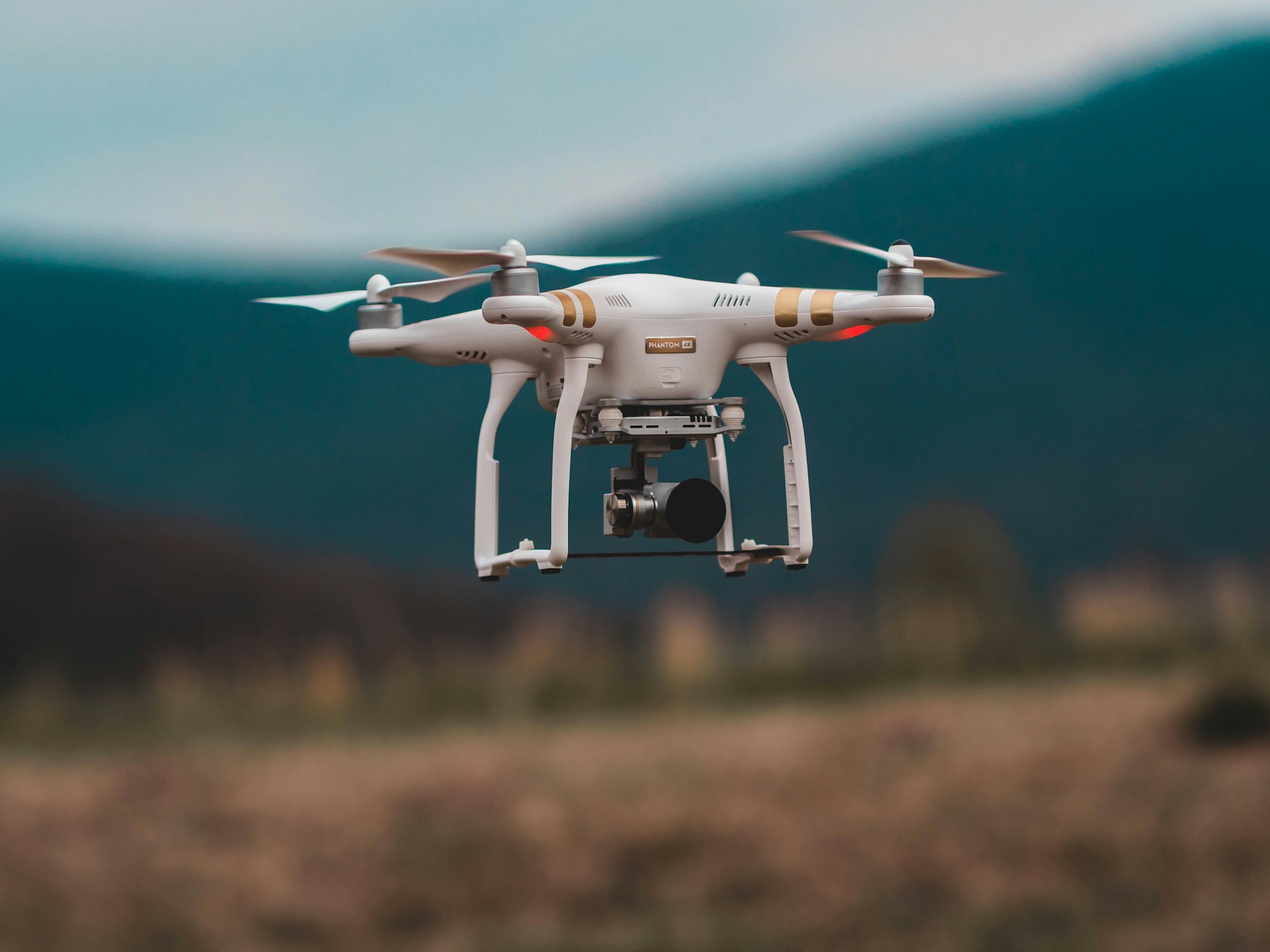
Defense technology breaks down into a handful of core areas, most of which also have uses among the general public, as well as just militaries or governments. The value increasingly comes from connecting them, so systems built to work alone can share data and operate together.
- AI and data: AI and large language models (LLMs) range from command and control (C2) to predicting vehicle maintenance and managing spare parts. The central challenge is turning raw data into usable intelligence.
- Autonomy and uncrewed systems: Drones and uncrewed air, surface and sub-surface platforms carry sensors and logistics with less risk to people, which puts a premium on human-machine teaming. Autonomy is likely to become an investment priority.
- Sensing and ISR: Sensors and exploitation of the electromagnetic spectrum drive intelligence, surveillance and reconnaissance (ISR), underpinning situational awareness and threat detection.
- Cybersecurity and secure communications: Protection for networks and data, the secure links between platforms and combat, and the defense of critical infrastructure such as power and water.
- Space and connectivity: Satellites for surveillance and navigation, plus the communications backbone that ties the other domains together.
- Advanced materials and manufacturing: Hypersonics, armor and additive manufacturing that builds complex parts faster and closer to the point of need.
Employers, from prime contractors (the ‘primes’) to startups, are keen to find talent who can navigate these areas and adapt quickly. Many of them build dual-use technology that works in military and civilian markets, and cheaper commercial off-the-shelf (COTS) components have lowered the barrier for SMEs to enter the mix.
How Much Money is Going into Defense Tech?
Funding and investment for defense tech around the world ranged between $16.5 billion and $49.1 billion in 2025, as investors backed autonomous systems and military AI with national security in mind.
The surge has a long runway. Global defense spending is projected to reach $3.6 trillion by 2030, up from $2.718 trillion in 2024. Startups still take a small slice of the actual, though. Pentagon contract spending with DefTech startups roughly doubled to $4.3 billion in FY2025, yet sits under 1% of total contract dollars, with primes winning the rest.
How Does Defense Tech Differ Across the US, UK and Europe?

Defense tech looks different in each market. The US runs the largest budget and has a stronger startup pipeline, the UK is rebuilding its forces around a new strategy, and the EU is pooling money to rearm and buy European.
United States
The US is by far the biggest defense market, spending $997 billion in 2024, which was 37% of the world total at the time, according to ESD. It works with startups through bodies like the Defense Innovation Unit, which scaled its budget to nearly $1 billion in 2024, while ITAR export rules and long procurement cycles still shape who can sell.
United Kingdom
The UK’s Strategic Defense Review, published in June 2025, committed to the largest sustained spending increase since the Cold War. The government pledged 2.5% of GDP by 2027, with an ambition of 3% in the next parliament, up from an estimated 2.33% in 2024. Industry body techUK has pressed the Ministry of Defense to speed up procurement and open contracts to more startups and SMEs.
Europe
The EU is scaling fast. Its ReArm Europe Plan and Readiness 2030 White Paper, published in March 2025, aim to enable over €800 billion in defense spending, with a new instrument called SAFE raising up to €150 billion on capital markets and a push to buy European. Germany was the region’s largest spender at $88.5 billion in 2024.
Across all three markets, NATO members agreed at the June 2025 Hague summit to invest 5% of GDP annually by 2035. Every one of those commitments turned into demand for engineers, which is where the hiring race begins.
Building a Defense Tech Team?
The technology keeps advancing, and for most companies, finding the right people at the heart of AI, autonomy, cyber and networks can feel like a growth constraint. At Alexander Daniels Global, we help Industry 4.0 businesses across the UK, US and DACH region find that talent.
Talk to our team about building yours today.
